Natural gas supplies critical energy to central heating boilers, domestic water heaters, and restaurant cooking ranges throughout Hell's Kitchen. Because natural gas is highly combustible and pressurized, all gas piping work in New York City is strictly regulated under the NYC Fuel Gas Code and must be executed under the direct oversight of a Licensed Master Plumber. When you require certified gas line repair Hell's Kitchen Manhattan property managers and homeowners depend on, our team delivers code-compliant diagnostic testing, precision pipe repairs, and DOB filing services.
From pre-war residential buildings along Ninth Avenue and W 47th Street to contemporary towers nearing Hudson River Park, we ensure your building's gas infrastructure remains safe, tight, and fully compliant with city safety standards.
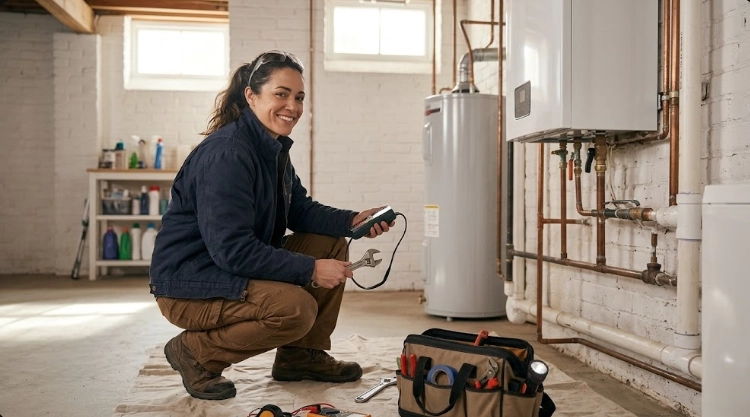
NYC Local Law 152 Periodic Gas Piping Inspections
New York City Local Law 152 mandates periodic gas piping inspections for all buildings classified in occupancy groups other than detached one- and two-family homes (Group R-3). When scheduling a required gas piping inspection Hell's Kitchen Manhattan building owners fulfill their four-year compliance cycle established by the NYC Department of Buildings.
During an official LL152 survey, our licensed personnel inspect all exposed gas lines from the service point of entry at the cellar wall through public hallways, corridors, boiler rooms, and mechanical spaces. We use calibrated combustible gas detectors to identify micro-leaks, verify proper pipe hanging and support brackets, check for unpermitted branch connections, and inspect shut-off valves for rapid operability. Any identified non-compliant conditions are documented clearly for prompt correction and DOB filing sign-off.
Permitted Gas Appliance Hookups and Line Extensions
Installing a high-output commercial range or residential kitchen cooktop requires certified gas line installation for stove Hell's Kitchen Manhattan properties require. NYC Building Code strictly prohibits flexible appliance connectors from passing through cabinetry, floors, or walls. Every appliance must have a dedicated, readily accessible brass shut-off valve located in the same room within six feet of the appliance.
Before hooking up high-BTU restaurant equipment or modern residential gas appliances, we verify that the gas meter and branch riser diameter provide adequate volume, preventing dangerous fuel pressure drops that cause pilot outages and burner flame rollouts.
Need Professional Gas Piping Service in Hell's Kitchen?
Speak with a licensed plumbing specialist about gas inspections, appliance connections, or system testing.
Call (315) 202-8009Common Signs of Gas Piping Deterioration
Mercaptan Odor (Rotten Eggs)
Artificial chemical odorants added by Con Edison signaling active unburned fuel escaping from loose fittings or corroded pipe walls.
Flaking External Rust & Scale
Humid basement air causing heavy surface rust that corrodes through the threaded joints of Schedule 40 black iron piping.
Hissing Sounds Near Valves
Audible gas discharge escaping past dried pipe dope, worn valve packing glands, or damaged ground-joint union seats.
Our Systematic Diagnostic and Repair Workflow
Working with fuel gas lines requires uncompromising precision and strict adherence to safety protocols:
Combustible Gas Sniffing & Electronic Scanning
We trace exposed pipe runs using intrinsically safe digital sniffers capable of detecting combustible gas at parts-per-million thresholds.
Line Isolation & High-Precision Manometer Testing
We isolate the pipe run and connect a digital manometer to perform code-stipulated pressure-holding tests under NYC DOB standards.
Pipe Replacement & Certified Threading
Compromised sections are excised and replaced using heavy-wall ASTM Schedule 40 black steel pipe, reamed and sealed with gas-rated sealant.
Utility Coordination & Safe Commissioning
Following successful pressure hold certification, we safely purge air from the line, restore gas flow, check all joints with non-corrosive bubbling solution, and test light connected appliances.
Frequently Asked Questions About Gas Line Repair
Evacuate everyone from the building immediately. Do not operate light switches, do not use indoor phones, do not ring doorbells, and do not use matches or flames. From a safe distance outdoors, call 911 or the Con Edison gas emergency hotline (1-800-752-6633) immediately.
NYC Local Law 152 mandates periodic gas piping inspections for all buildings classified in occupancy groups other than detached one- and two-family homes (Group R-3). Multi-family walk-ups, co-ops, condominiums, and commercial mixed-use properties along Ninth and Tenth Avenues must be inspected once every four years by a licensed master plumber.
No. Under the NYC Fuel Gas Code, all gas line modifications, extensions, and appliance connections must be executed under filed DOB permits by a Licensed Master Plumber, followed by mandatory pressure testing and inspection sign-offs.
Certified plumbing technicians use intrinsically safe electronic combustible gas sniffers sensitive to parts-per-million concentrations, ultrasonic leak listening equipment, and calibrated digital manometers to isolate pressure drops across isolated pipe sections.
If your gas shut-off has affected central heating equipment, consult our boiler repair page. Review geographic coverage across Manhattan on our service areas page, or contact our team directly on our contact page.
Schedule Gas Piping Inspection or Repair
Call (315) 202-8009 now to arrange licensed gas piping service in Hell's Kitchen, Manhattan.
Call (315) 202-8009